Ten Toes, One Job: A 2026 Field Guide to Baby Shoes That Stay Put
There is a particular kind of British family day that tests a baby shoe harder than any shop assistant's smile. It starts with a pram walk, loosens up at soft play, and ends with a pub lunch where at least one small shoe threatens to disappear under a table. The shoe has to be cute, yes, but it also has to do a job. This is the 2026 shoe audit: ten toes, one mission, and a lot less scrabbling around on café floors.
Start with the fit check, not the cute factor
A baby shoe can look adorable on the shelf and still be a tiny nuisance on the foot. Before you fall for a buckle or a bow, check the basics. Press the toe area while your child stands: you want roughly a centimetre of wiggle room, not a shoe that is already being outgrown by Tuesday. Run a finger around the heel. It should feel snug enough not to flap, but not so tight that it leaves a mark. Check the width across the ball of the foot, too, because babies are not all built like the same little loaf.
Measure both feet, ideally later in the day when feet can be a touch fuller. Most children have one foot slightly bigger, so fit the larger one. Do the check with the socks or tights they will actually wear with the shoes. A shoe that fits over a thin cotton sock may be a different story over a wool blend. And remember that non-walkers do not need stiff shoes for everyday pram life; warm, flexible booties are often kinder.
Soft soles versus rigid soles: a sensible split
Soft-soled shoes are lovely for crawlers, cruisers and early walkers. They let the foot flex, feel the ground and do that important wobbly work of learning balance. Leather moccasins, soft booties and flexible pre-walkers all earn their place in the pram bag. They are also forgiving when a baby decides that shoes are a temporary snack.
Rigid soles come into their own once walking is confident and mostly outdoors. You still want flexibility, not a plank. Bend the shoe at the ball of the foot; it should give a little. A rigid sole should protect from cold and bumpy pavements without turning every step into a clomp. Avoid handing down heavily worn shoes if the soles have moulded to another child's foot, as the shape may not suit. A barely worn pair is fine; a beloved everyday pair that has done three siblings is usually better as a garden spare.
The sock-and-shoe handshake
Socks are half the fit. A bulky sock in a snug shoe can make toes curl, while a thin sock in a roomy shoe lets the foot slide. For winter, look for wool blends that are warm but not lumpy. For tights weather, check that the shoe fastening does not catch. In summer, a thin cotton sock or a bare foot in a breathable sandal can work, but check the straps do not rub.
Grip socks are brilliant for soft play, but they are not a substitute for a well-fitting shoe outdoors. If your child is between sizes, a slightly thicker sock can bridge the gap for a week or two, but do not rely on it for long. The best test is simple: put the shoe on, ask your child to stand, and watch the heel. If it slips up and down like a tiny lift door, try a different sock or a different shoe.
Pram mornings: shoes that nap nicely
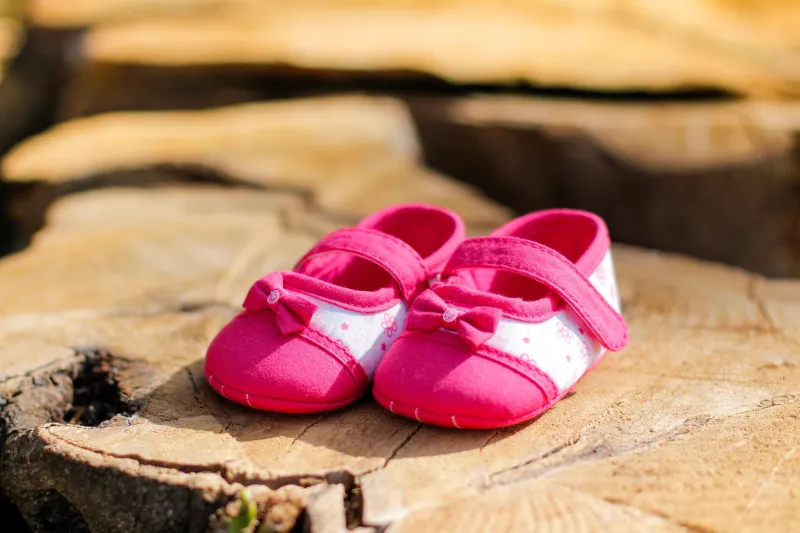
Pram mornings call for shoes that are easy on, easy off and happy to be tucked under a footmuff. Soft leather booties with elastic ankles are a sweet choice, especially for babies who are not walking yet. For cruisers, a flexible pre-walker with a velcro strap is practical without looking like a miniature gym shoe. Boutique-friendly picks include simple leather moccasins, fleece-lined booties for cold snaps, and soft Mary Janes for a baby who is mostly carried but occasionally wants to stand and inspect a leaf.
Keep a spare pair of socks in the pram bag. Not because you expect disaster, but because pram walks have a way of ending with one sock mysteriously damp. A little shoe bag is also handy for keeping the clean pair separate from the muddy pair.
Soft play afternoons: grip, bend and no escape artists
Soft play is where shoes meet their match. Many venues ask children to wear socks, so check the rules before you go. If shoes are allowed, choose a pair with a grippy sole and a secure fastening. Velcro is a parent's friend. Buckles look charming but can be fiddly when a toddler is determined to launch themselves into a ball pit. Elasticated slip-ons are fine for quick changes, but check they are not so loose that they become projectiles.
Look for a flexible sole that bends with the foot, and avoid chunky styles that catch on soft play steps. A washable upper is a bonus. So is a dark sole that does not show every crumb. The real test is the shake test: hold the shoe and give it a gentle wiggle. If it feels like it would surrender during a toddler sprint, leave it for best.
Sunday lunch: the under-table test
A pub lunch is not a fashion show, but it is a shoe survival course. You want something that stays on when your child slides under the table to investigate a chair leg. A secure strap, a zip or a snug elastic opening all help. Wipeable leather is practical; pale suede is a lovely idea until a Yorkshire pudding lands on it.
For Sunday lunch, a smart-casual shoe works best: a little leather trainer, a soft Mary Jane, or a flexible boot with a side zip. Keep a spare pair of socks in the changing bag and a cloth wipe in your pocket. And if a shoe does go missing under the table, do not panic. Check the booth, the buggy basket and the coat pile. It is almost always in one of those three places, usually with a chip beside it.
A boutique-friendly shoe capsule
You do not need a shoe wardrobe the size of a small shoe shop. Three pairs can cover most of ordinary family life: a soft pram bootie or moccasin for babies and early walkers, a flexible everyday pair with a grippy sole, and a slightly smarter pair for Sunday lunch or a birthday party. Rotate them, check them monthly, and pass on the ones that have been outgrown while they still have life in them.
At Sweet Bambino, we like shoes that look lovely but are not too precious to be worn. The best pair is the one your child forgets they are wearing, right up until the moment they try to take it off in a café. Choose for fit, flexibility and a fastening that defeats small fingers just enough, and you will spend less time crawling under tables and more time enjoying the outing.
The two-minute monthly audit
Once a month, check the toes, the heel, the seams and the soles. Look for red marks, rubbing, splits or a fastening that has gone slack. If a shoe is leaving a mark, it is not a bargain. If a sole is worn smooth, it is not for soft play. If your child can step out of it without undoing anything, it is not for pram mornings either. A quick audit keeps the shoe drawer honest and the family day moving. Ten toes, one job: stay comfortable, stay on, and look rather sweet while doing it.